
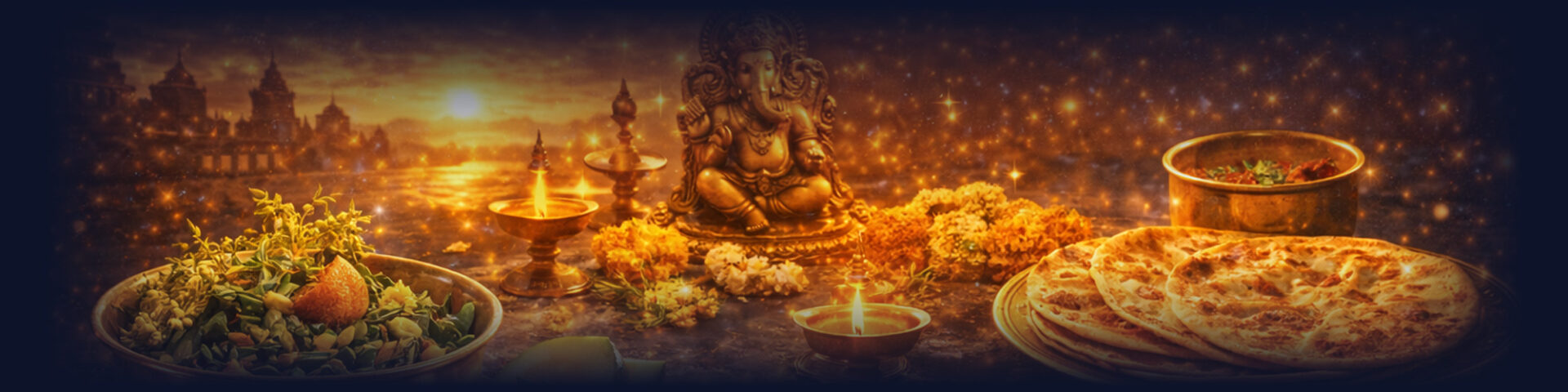
In heritage cultures, gastronomy is rarely just about sustenance; it is a profound philosophical statement. The dishes prepared to mark the passage of the year in Hindu traditions are masterpieces of culinary symbolism, designed to physically manifest the complex emotional spectrum of the human experience. It is the ultimate expression of mindful eating.
1. The Alchemy of Ugadi Pachadi
The centerpiece of the New Year in Andhra Pradesh and Telangana is Ugadi Pachadi. This highly specialized preparation masterfully balances six distinct flavor profiles: the bitterness of neem flowers, the sweetness of jaggery, the sour depth of tamarind, the heat of green chili, salt, and the astringent tang of raw mango. This is not merely a recipe; it is an edible philosophy. The bitterness acknowledges inevitable challenges, while the sweetness encourages the savoring of joy. Consuming it sets a sophisticated tone of emotional resilience for the year ahead.
2. Prosperity on the Plate
Across different regions, the architectural composition of the feast shifts to reflect local agriculture and history. In Maharashtra, the New Year (Gudi Padwa) is celebrated with puran poli, a complex, sweet flatbread symbolizing abundance. Further south in Kerala, the Vishu Sadya is a sprawling vegetarian banquet served on a fresh banana leaf, heavily utilizing seasonal coconut, lentils, and clarified butter (ghee) to represent fertility and harmony with the immediate ecosystem.
3. The Ritual of Consumption
In these traditions, the act of eating is elevated to a spiritual ritual. Food is often prepared as prasad—a sacred offering. By consuming these meals mindfully, engaging all the senses, the diner participates in a centuries-old practice of gratitude, grounding themselves in the present moment as the calendar turns.